Fundamental
Multinational Ltd.
TRAVEL · PATHWAYS · OPPORTUNITY
  1. Home
  2. New Zealand

Travel and mobility

New Zealand

Everything you need to know about moving to New Zealand: the visa routes, who qualifies, the steps, the fees and how long it all takes.

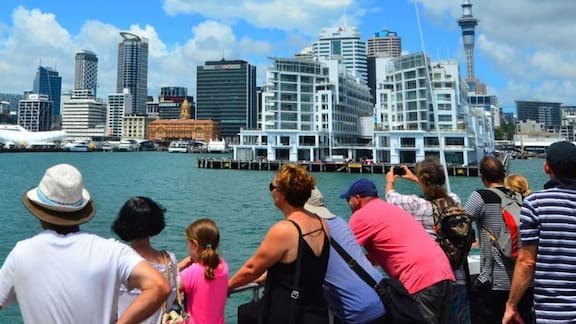
Auckland skyline with the Sky Tower reflected in the harbour at dusk

Three pathways

Choose the route that fits you.

We process applicants through three pathways. Not sure which one suits you? Apply and we will advise you.

Pathway 1

Citizen or permanent resident sponsor

A New Zealand citizen or permanent resident gives their documents for processing. This leads to an open work permit.

  • Your sponsor is a citizen or permanent resident living in New Zealand.
  • Your sponsor’s documents are submitted for processing.
  • An open work permit is not tied to one employer.
  • Places are very limited.
Pathway 2

Accredited employer

An accredited New Zealand employer gives you a job offer. This leads to an employment-based work visa, called the Accredited Employer Work Visa (AEWV).

  • The job offer comes from an accredited employer.
  • The visa is tied to that employer.
  • Your employer sets your entry date.
Pathway 3

Junior software developer

A pathway for junior software developers who want to start their careers in New Zealand.

  • Suits developers early in their careers.
  • Bring a portfolio or GitHub link to show your work.
  • Graduates of Build the World Initiative (Edurebrand) can apply. Other developers can join by paying the enrolment fee.
  • We confirm the exact requirements for you.
All three pathways start the same way. Apply online, upload your passport photograph, your passport and any supporting documents, and our team will confirm which pathway fits you and what happens next. Requirements depend on immigration rules and your circumstances.

Current offers

Open now, with limited places.

Our current New Zealand offers. Tap a flyer to view it full size.

Pathway 1

Travel with a New Zealand citizen.

A rare chance to bring up to two persons into New Zealand with sponsorship from a New Zealand citizen. Places are very limited.

Pathway 3

Your partner for a trip to New Zealand.

Travel to New Zealand as a junior software developer and build your career. Partner with us today and turn your skills into global opportunities.

Timing and eligibility. Places are limited and requirements depend on immigration rules and your circumstances. Apply online or ask us for the current details before you decide.

Pathway 3

Junior software developer.

A pathway for junior software developers who want to start their careers in New Zealand.

Who it suits

Developers early in their careers, including graduates of Build the World Initiative (Edurebrand).

What to prepare

Your CV, certificates, a portfolio or GitHub link, and the documents in the checklist further down this page.

How to apply

Choose Pathway 3 in the online application and tell us your main skills. Our team confirms the exact requirements and next steps.

01

Apply online

Tell us about yourself, your main skills and share a link to your portfolio or GitHub.

02

We review your profile

Our team looks at your skills, your work and your documents.

03

We confirm the next steps

We explain the requirements, costs and timing that apply to you.

Pathway 3 costs for graduates of Build the World Initiative (Edurebrand). You pay only the visa fee (NZD 1,540), the legal fee (NZD 1,300, paid to an accredited lawyer in New Zealand who represents you), the medical check-up (₦350,000, at a medical centre in Nigeria) and the police report (₦50,000, at a Nigerian police station). Nothing is paid to Fundamental Multinational. See the full tech opportunity.

Pathway 2: employer work visa

The AEWV in four facts.

The rest of this page explains the employer-sponsored work visa in plain language. Here is the short version.

Main routeAccredited Employer Work Visa

A work visa tied to an employer that Immigration New Zealand has approved. Most working Nigerians use this route.

Government feeNZD 1,540

AEWV application fee for the main applicant, including the immigration levy.

Processing timeAbout 5 to 7 weeks

Immigration New Zealand’s published time for most applications. Your actual date still depends on your employer.

Your entry dateSet by your employer

The visa is issued around the date your employer needs you, not when your documents are ready.

Why New Zealand?

A calmer, safer and more orderly life.

For many Nigerians, New Zealand means good public services, low corruption, clean air and a reputation as one of the most peaceful countries in the world. Its points-based immigration routes also feel more predictable than some other Western countries.

Be realistic. Each route looks simple on an immigration website. In practice it is harder, which is why this page explains every step, cost and risk in plain language.
  • Safe and peacefulConsistently ranked among the most peaceful countries.
  • Good public servicesHealthcare, education and infrastructure that work.
  • Low corruption, clean airA quieter pace of life and a strong rule of law.
  • Clear, points-based routesRules you can read, plan around and prepare for.

Visa routes

Four main ways in.

Most people use one of these. The right one depends on your job, your studies and your family.

Most common

Accredited Employer Work Visa (AEWV)

A temporary work visa tied to a specific employer. Only employers accredited by Immigration New Zealand can hire people from abroad.

Skilled Migrant Category (SMC)

A residence visa for people with a qualifying skilled job or job offer, based on points. Without a genuine job offer from an accredited employer, very few people qualify.

Study visas

For people who study in New Zealand. They can lead to post-study work rights.

Family and partnership visas

For people joining a spouse or close relative who already lives in New Zealand.

Why the AEWV matters most. If a company is not accredited, it cannot bring someone in from Nigeria, no matter how good the job offer sounds. Always confirm that the employer is accredited.

Who qualifies

What you need to qualify.

These are the practical requirements for the work-visa route most Nigerian applicants use.

The basics

  • A job offer from an accredited employerWithout one, the visa cannot move forward.
  • Skills that match the jobYour CV, certificates and experience must fit the role.
  • Qualifications that are recognisedNigerian qualifications often need a formal assessment. It costs money and can take months.
  • A sponsor in New ZealandThey review your profile and match you with accredited employers who are really hiring.
  • A clean police character certificateIssued in Nigeria. See the documents section.
  • A medical examinationDone through IOM or a teaching hospital such as UCH.
  • Proof of funds (BTA)At least $2,500 shown in your account.
  • Proof of accommodationWhere your employer is not providing it.

If you are coming with family

Usually only one spouse, the one with the job offer, is the main visa holder. The other spouse and the children are included as dependants. They do not each hold their own work visa.

Families should also plan for accommodation costs of $1,200 to $1,500 and have proof ready. Dormitory-style housing that some employers give single workers is usually not available to families.

Tip. Start your police certificate, medical exam and qualification assessment early and at the same time. A delay in any one of them can hold up the whole application.

Step by step

From first conversation to your flight.

Here is how the journey usually unfolds.

  1. Submit your documents to a genuine sponsor representative

    Give your CV, available documents, skills certificates, passport photograph and the data page of your passport to a genuine representative of a sponsor in Nigeria.

    Take time to confirm the person is genuine before you hand over anything.
  2. The sponsor reviews your profile

    The sponsor studies your credentials and decides how fit you are for the jobs that are available right now.

  3. You are scheduled for an employer interview

    If you qualify, an interview with an accredited employer is arranged. The employer fixes the date, so be flexible.

  4. You attend a short Zoom interview

    Interviews are held over Zoom and usually last less than an hour. The questions depend on the job.

    Find a quiet place with stable internet, dress neatly, and answer honestly and clearly.
  5. Have your email and phone number ready

    You will be asked for both straight after the interview, so have them ready before you log in.

  6. Wait for the employer’s response

    The reply usually comes by email within a few days to two weeks. Use an email address your sponsor can also see, and check your spam folder.

  7. The sponsor starts your visa processing

    As soon as the job offer is ready, the sponsor begins processing your visa application.

  8. You provide your supporting documents

    Skills certificates, medical examination, police report, proof of BTA and proof of accommodation.

    Start gathering these early. Missing items are what slow most applications down.
  9. The embassy issues your visa

    You first receive a visa approval message. The main e-visa is then issued based on the date the employer gives, which can be some time after approval.

  10. You plan your trip

    Once the e-visa is actually issued, plan your travel, buy a one-way ticket and fly to New Zealand.

    Do not buy a ticket before the e-visa is issued.
Your entry date belongs to the employer. It depends on when your employer wants you to arrive and start work. It does not depend on how early your documents were ready, how fast your sponsor worked or how quickly the embassy processed your file. Approval may come early, but you travel when the employer is ready for you.

The interview

What to expect on the day.

A short video interview with an accredited employer is a key step.

Sample questions (caregiver role)

The questions depend on the job. For a caregiver, an employer might ask:

  • Are you married?
  • Would you like to come with your family?
  • Do you have a driver’s licence?
  • Do you have insurance?
  • Can you manage a client with a pet?
  • How long can you drive?
  • How do you manage frustrated and violent clients?
  • Do you have any certification?

How to prepare

  • Find a quiet place with a stable internet connection.
  • Dress neatly, as for a real job interview.
  • Answer honestly and clearly.
  • Have your email address and phone number ready before you log in.
  • Be flexible. The employer chooses the interview date.
  • Have your certificates close by in case you are asked about them.

Documents

Your document checklist.

Gather these early. Missing paperwork is the most common cause of delay.

CV and skills certificates

Your CV and the certificates for the skills you claim to have. Your sponsor uses them to match you with employers.

Passport details

Your passport photograph and a clear copy of the passport data page.

Police character certificate

Start with an online form and a first payment of around ₦30,000. Then give fingerprints and a facial capture in person at a centre such as Alagbon in Lagos or Iyaganku in Oyo State. Collecting the printout costs roughly ₦5,000 to ₦10,000 more.

Medical examination

A full medical through IOM or a teaching hospital such as UCH. You pay the centre directly, so confirm the price when you book. The results go to the embassy with your application.

Proof of funds (BTA)

The Basic Travel Allowance is money you must show you have to support yourself on arrival. The minimum is $2,500, shown in a domiciliary (US dollar) account or an account with a bank like UBA that operates in New Zealand.

Proof of accommodation

Needed where your company is not providing housing. Families should prepare for $1,200 to $1,500 and have proof ready.

No proof, no visa. Your visa will not be released if the embassy does not see proof of your accommodation (where your company is not providing it) and proof of your BTA of $2,500 in your account. Have both ready before you apply.

Fees and costs

What it actually costs.

A full breakdown of the figures involved, from the official fee schedule and the Nigerian side of the process.

ItemCostWhat it covers
AEWV application fee (main applicant)NZD 1,540Application fee plus immigration levy, paid to Immigration New Zealand.
Partner or dependant visaExtraAn additional cost on top of the main applicant’s fee. Confirm the current figure before you apply.
Nigerian police character certificateAbout ₦35,000 to ₦40,000Around ₦30,000 for the online form, plus roughly ₦5,000 to ₦10,000 on collection. The official fee has varied, so budget on the higher side.
Medical examinationPaid to the centreIOM or a centre like UCH. Confirm current pricing when booking.
Basic Travel Allowance (BTA)Minimum $2,500Not a fee. It is money you must show in a domiciliary or UBA-type account. A gap here can delay your visa.
Accommodation (families)$1,200 to $1,500Proof is needed for a quick visa release. Families usually cannot use dormitory-style housing.
Sponsor’s facilitation feeTypically $1,200 to $3,500Not a government charge. It pays for finding accredited employers, reviewing your application and acting on your behalf.
Skilled Migrant Category residence visaNZD 6,450For a family application on that pathway (application fee plus levy).

Amounts shown with a $ are written as they appear in our guide. Please confirm the exact amount and currency with us before you pay anything. Government fees change, so check Immigration New Zealand on the day you apply.

How you pay from Nigeria

New Zealand dollars are not easy to get in Nigeria, so most applicants convert their naira through a bureau de change. The rate has generally been roughly ₦1,000 to ₦1,400 per NZD. It moves daily, so check on the day.

The converted funds are sent to the sponsor in New Zealand, who handles the payments on that end. This route has worked reliably for many applicants who use reputable sponsors that are easy to verify online.

About the sponsor’s fee

It is not an official government charge. It pays for a real service: finding accredited employers, reviewing applications and liaising on your behalf. A professional sponsor runs a real operation in New Zealand with its own rent, staff and overheads, and the work can take days or weeks.

Choose a sponsor you can verify online, with a visible track record, who is upfront about what they charge and why.

How long it takes

Timing, in plain language.

There is no single fixed timeline. The employer sets the pace.

Employer response

After your interview, the employer’s reply usually arrives within a few days to two weeks.

Qualification assessment

If your Nigerian qualification needs to be recognised, this can take months. Start early.

Visa processing

Immigration New Zealand publishes its processing times. Recently, most AEWV applications were decided in roughly 5 to 7 weeks. Times change, so confirm the current figure.

Visa release and travel

Approval can come early, but the e-visa is issued closer to the start date your employer gave.

The point that trips people up most. If the employer wants you to start next month, the visa is processed and issued for that timeline. If the employer does not need you until next April, the embassy may approve your application and email you, but the actual visa will not be issued until closer to that start date. Nobody can speed this up. Finding a job in New Zealand is often fast, but the visa timeline runs on the employer’s clock.

Immigration and residence

From work visa to permanent residence.

A work visa is often the first step. These are the main routes to residence.

Green List Tier 1: Straight to Residence

If your job is in a Tier 1 role and you have an offer from an accredited employer, you can apply for residence straight away.

Green List Tier 2: Work to Residence

If your job is in a Tier 2 role, you work in New Zealand for 24 months first and then apply for residence.

Skilled Migrant Category

A points-based residence visa. Points come from things like registered skilled work, qualifications and a job offer at the right wage level.

Rules are changing. Immigration New Zealand updated some Skilled Migrant Category and Work to Residence wage rules from 24 August 2026. Always check the current settings before you apply, or ask us.

Green List

Jobs that get you there faster.

If your occupation is on New Zealand’s Green List, your path is much quicker. The list has two tiers.

Tier 1

Straight to Residence

Apply for residence as soon as you have a qualifying job offer.

Healthcare and medical
General practitioners, registered nurses, midwives, clinical psychologists and specialists (surgeons, anaesthetists, psychiatrists, radiologists).
Engineering
Civil, mechanical, electrical, structural, environmental, chemical and geotechnical engineers.
Information and communication technology
Software engineers, ICT security specialists and database administrators. Minimum wage thresholds apply, such as NZD 120,000 for some roles.
Construction and management
Construction project managers and quantity surveyors.
Education
Primary and secondary school teachers.
Tier 2

Work to Residence

Work in New Zealand for 24 months, then apply for residence.

Skilled trades
Electricians, plumbers, diesel motor mechanics, metal fabricators, welders and fitters.
Construction and infrastructure
Construction supervisors and civil machinery operators.
Education and social services
Early childhood (pre-primary) teachers and special needs teachers.
Agriculture
Dairy cattle farmers.

This is a guide, not the full list. Wage thresholds and requirements change, and some jobs need New Zealand registration first. If your job is not on the list, you can still work under an AEWV, and residence usually goes through the points-based route. Not sure whether your occupation qualifies? Ask us on WhatsApp.

After you land

Life in New Zealand, honestly.

Arriving is not the finish line. For many people it is where a different kind of effort begins.

Getting requalified

Doctors, engineers and accountants often find their home experience counts for little until they requalify or get local registration. Many work below their skill level for the first year or two.

Cost of living

Housing is high, especially in Auckland and Wellington. A family of four is often advised to budget about NZD 80,000 to 120,000 a year, depending on location and lifestyle.

Culture and climate

The pace, communication style and workplace culture feel different from Nigeria. Winters are colder and darker, and visits home are expensive and rare.

Starting over

You rebuild your reputation, your friendships and your sense of belonging from zero, often while still supporting family back home.

Proof of enough money to support yourself and your dependants while you settle in is also expected, which can be a real hurdle when naira savings convert to a modest sum in New Zealand dollars.

Before you commit

Five things to remember.

  • The job comes before the visaThe visa date belongs to the employer, not to you, your sponsor or Immigration New Zealand. Plan your money and expectations around that.
  • Work with a sponsor you can verifyGood ones are easy to find online, have a visible track record and are upfront about their fees.
  • Start paperwork early, in parallelPolice certificate, medical, qualification assessment, BTA and accommodation proof all take time.
  • Budget honestlyCount visa and agent fees, but also the cost of living once you land. The first months can be tight.
  • Go in with your eyes openMany people say the move was worth it. None say it was easy.

Protect yourself

  • Confirm that a sponsor or representative is genuine before you hand over documents or money.
  • Nobody can speed up your entry date. Be careful of anyone who promises to.
  • Do not buy a plane ticket until your e-visa has actually been issued.
  • Make sure the email address you give is one your sponsor can also access, so no feedback is missed.
  • Check your spam folder for replies from employers.

Ready to apply?

Answer a few direct questions and upload your documents. It takes about 10 minutes.

FAQ

Questions people ask most.

Can I go to New Zealand without a job offer?

For most working Nigerians, the realistic route is the Accredited Employer Work Visa, which needs a job offer from an accredited employer. Under the Skilled Migrant Category, very few people qualify without one. Pathway 1 is sponsorship by a New Zealand citizen or permanent resident, which leads to an open work permit.

How long does the visa take?

Immigration New Zealand publishes its processing times. Recently, most AEWV applications were decided in about 5 to 7 weeks. But the date you travel is set by your employer, so the visa may be issued later than approval.

How much does it cost altogether?

The government fee for the AEWV is NZD 1,540 for the main applicant. On top of that you pay for the police certificate, medical examination, any qualification assessment and the sponsor’s fee, and you must show a BTA of at least $2,500. See the fees table above.

Can my family come with me?

Yes, usually as dependants of the main visa holder. Families should plan for accommodation of $1,200 to $1,500 and have proof ready, since dormitory-style housing is usually for single workers.

My visa was approved. Why has it not been issued?

The embassy first sends an approval message. The e-visa is issued closer to the start date your employer gave. Nobody can speed this up.

Do I need a sponsor?

In practice, most applicants do. A sponsor in New Zealand reviews your CV and qualifications, matches you with accredited employers who are hiring, and handles the process there. Choose one you can verify.

Is the sponsor’s fee a scam?

It is not a government charge, but it is normal for professional sponsors to charge for real work. A typical range is $1,200 to $3,500. A genuine sponsor is open about what they charge and why.

Do I need IELTS?

Some routes and roles need proof of English. If a test is needed, our IELTS preparation can help you get ready.

When should I buy my ticket?

Only after the e-visa has been issued. Approval alone is not enough.

What are the three pathways?

Pathway 1: a New Zealand citizen or permanent resident gives their documents for processing, which leads to an open work permit. Pathway 2: an accredited New Zealand employer gives you a job offer, which leads to an employment-based work visa (the AEWV). Pathway 3: the junior software developer pathway, for developers starting their careers. Apply online and we will tell you which one fits you.

How do I apply?

Use our online application. Choose a pathway, answer a few direct questions, upload your passport photograph, the photo page of your international passport and any supporting documents, then submit. Our team reviews it and contacts you.

What should I upload?

Your passport photograph and the photo page of your passport, plus any supporting documents: CV, certificates, police certificate, medical result, proof of BTA and accommodation, a job offer letter, or your sponsor’s documents. You can upload up to 25 supporting files, in JPG, PNG or PDF.

What is the junior software developer pathway?

It is a pathway for junior software developers who want to start their careers in New Zealand. Choose Pathway 3 in the online application, tell us your main skills and share a link to your portfolio or GitHub. Our team confirms the exact requirements and next steps for you.


What we help with

Support from first question to application.

Here is how we can help you explore New Zealand.

Understand the pathway

We explain how the sponsorship pathway works and who it may suit.

Know what is required

Find out which documents and information you will need.

Prepare your application

Get help organising everything before you apply.

Prepare for IELTS

If a language test is needed, our IELTS preparation can help.

How to get started

Three simple steps.

You can begin with a single message.

01

Contact us

Message us on WhatsApp or use the enquiry form.

02

Talk it through

We discuss your goal, background and the options that may suit you.

03

Prepare properly

We help you understand what to prepare before you apply.

Please note. This guide is for information only and was last reviewed on 1 November 2026. Fees, wage thresholds and immigration rules change, and eligibility and outcomes depend on your individual circumstances. Decisions are made by the relevant authorities. Always confirm current details with Immigration New Zealand or ask our team. We provide information and guidance.

Ready to explore New Zealand?

Send us a message and we will talk through your options.

Related pages